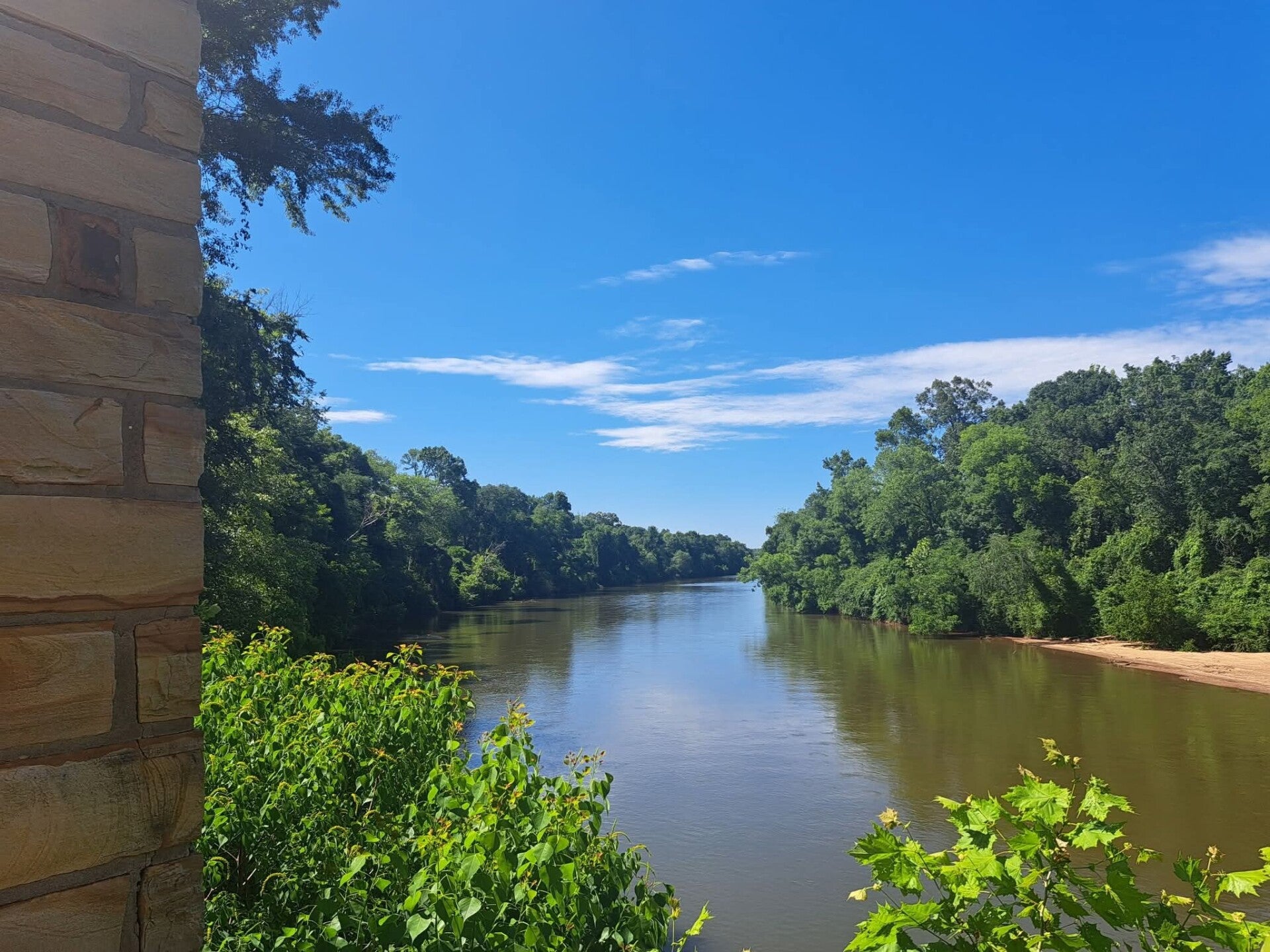
Saunterin' with Shane Bryant: Your journey begins here
Welcome to Saunterin' with Shane Bryant! Step into a world where faith, imagination, and southern gothic history intertwine. Here, you'll discover heartfelt devotionals and fun, creative, and sometimes comedic and captivating short stories written to inspire, entertain, and encourage. Join me on this literary adventure, and find out how you can support my dream of publishing new books and enriching the reading community.
The Wooden Indian Chief of Benny Hall’s Store
— The Heartbeat of the Harpeth
In 1966, the Harpeth River Valley wasn’t famous for much beyond its slow, muddy bends, its rolling hayfields, and the way the fog crept low across the bottoms every morning like it had unfinished business. But if you asked anybody who lived along those winding gravel roads what really held the valley together, they’d tell you — without hesitation — Benny Hall’s Country Store.
The store sat just outside White Bluff, where the blacktop thinned into gravel and the river made a wide, lazy curve behind a stand of sycamores and cottonwoods. It wasn’t much to look at — weathered clapboard siding, a slanted tin roof, and a screen door that creaked like an old man clearing his throat — but to the people who depended on it, it was everything. Groceries. Feed. Fabric. Fishing worms. Tobacco. Boots. Overalls. News. Advice. Sweet tea. And sometimes, if you stayed long enough, salvation.
Behind the long wooden counter stood Granny Lou Hall — Louise Hall, if you were being formal, though nobody ever was. She had soft gray hair pulled back in a low bun, wire-rim glasses that slid halfway down her nose by noon, and a voice that could soothe a crying baby or scold a grown man with the same gentle firmness. She knew everybody’s business, but she didn’t gossip — not out loud, anyway. She kept her knowledge tucked away like receipts in a ledger, waiting for the day it might be useful.
Her husband, Benny Hall, was usually gone during daylight hours, serving as a county sheriff’s deputy, though he was technically “retired” — at least according to the paperwork. He still wore the badge. Still carried the gun. Still believed in justice and good manners and the idea that a man’s word meant something. But while he enforced the law, Lou enforced something deeper — the quiet code of the community.
The store itself smelled like a mix of sawdust, coffee grounds, cured tobacco, and summer heat. The floorboards creaked beneath your feet, worn thin by decades of farmers’ boots and children’s sneakers. A single ceiling fan stirred the warm air, but it did little more than remind you it was trying.
Against the far wall stood shelves of canned goods, bolts of fabric, fishing tackle, candy jars, and seed packets. There was a glass case near the register that held pocket knives, chewing gum, fountain pens, and small tin toys. And in the corner, just beyond the icebox, stood the wooden Indian.
He was life-sized, carved from dark, polished wood, and dressed in a painted buckskin tunic with fringe at the sleeves. A single feather was carved into his hair, and his arms were crossed over his chest. His face was solemn, eyes forward, expression unreadable — somewhere between watchful and weary. No one remembered exactly where he came from. Some said he’d been there since before the store opened. Others claimed Benny found him at an auction in Dickson County. But no matter the origin, he had become part of the place, like the floorboards and the counter and the faint hum of cicadas outside.
Kids used to dare each other to touch him. Adults pretended not to notice him. And Granny Lou always made sure he stayed dusted.
“Don’t let him catch you misbehavin’,” she’d say with a wink.
And folks would laugh.
But not everyone laughed.
Jaimie Hall — Better Known as Jambo
Jaimie Hall — “Jambo,” as everyone called him — spent more time in that store than almost anyone else, save Granny Lou herself. At eleven years old, he was tall for his age but narrow in the shoulders, with brown hair that refused to stay combed and eyes that always seemed to be looking past the moment he was in.
He lived just up the road with his grandparents, Lou and Benny, since his mother had passed away when he was little and his father worked down in Nashville, driving trucks and sending what money he could. Jaimie helped around the store after school and on weekends — sweeping floors, stocking shelves, carrying sacks of feed, running small errands for the farmers’ wives who trusted him like their own grandson. Jaimie also worked some on Mr. Corlew's farm up the way.
“Jambo, honey, fetch me two yards of that blue gingham,” Mrs. Griggs would say.
“Yes ma’am,” he’d answer, already halfway to the fabric bolts.
He liked the work. It gave him purpose. It gave him a place. And it kept him close to Granny Lou, who seemed to know exactly when he needed a gentle hand on his shoulder or a quiet word in his ear.
But for all the warmth inside the store, the world beyond its doors was not always kind.
Just up the road lived the Sullivan boys — Toby and Jeff. They were brothers, about two and four years older than Jaimie, respectively, and they had earned themselves a reputation long before Jaimie ever learned to duck his head when he saw them coming.
Toby was thick-set with sandy hair and a crooked grin that never quite reached his eyes. Jeff was taller, broader, with shoulders already beginning to stretch his shirts and a jaw that clenched like he was always chewing on something bitter. Their father worked odd jobs when he worked at all, and their mother stayed out of sight. The boys roamed the gravel roads and riverbanks like they owned them, and in a way, they acted as if they did.
They had a habit of singling out smaller kids, quieter kids, kids who didn’t fight back.
Kids like Jaimie.
It started with taunts.
“Hey, Store Boy!” Toby would call out as Jaimie walked home from work at Mr. Earl Corlew’s cattle farm, his boots dusty, his hands smelling of hay and molasses.
“Better not let Granny Lou see them muddy pants,” Jeff would add, blocking the road with his bike.
Jaimie would try to keep his head down, his steps steady. He had learned that any reaction — anger, fear, pleading — only fed them.
But taunts turned into shoves.
Shoves turned into punches.
And punches turned into black eyes, scraped knuckles, bruised ribs, and long walks home with his face burning and his heart heavier than his boots.
He never told Granny Lou.
He never told Grandpa Benny.
And he certainly never told Cheryl Corlew.
The Corlew Farm and Cheryl’s Smile
Mr. Earl Corlew’s farm lay just beyond the river bend, where the land sloped gently upward and cattle grazed among fence posts that leaned like tired men. Earl was a tall, quiet farmer with sun-weathered skin and a voice that sounded like gravel rubbed smooth by years of wind and water. He didn’t talk much, but when he did, people listened.
His wife, Miss Clara Corlew, was the opposite — lively, warm, and full of gentle curiosity. She baked pies for the church, canned vegetables for half the valley, and had a way of making anyone feel welcome with a single smile.
And then there was Cheryl.
Cheryl Corlew was twelve — just a year older than Jaimie — with honey-blonde hair that she often tied back with a ribbon and a laugh that sounded like wind chimes on a summer porch. She had grown up around the farm, helping her grandparents gather eggs, feed chickens, and tend the garden. But lately, she had started finding reasons to wander near the fence line when Jaimie was working.
“Oh, hi, Jaimie,” she’d say, pretending surprise, even though she’d been watching him for ten minutes.
“Hey, Cheryl,” he’d reply, suddenly unsure what to do with his hands.
She liked the way he listened when she talked. She liked the way he blushed when she smiled. She liked the way he always offered to carry the heavier buckets, even when his arms were shaking.
And Jaimie liked her, too — more than he knew how to say.
But he was ashamed of the bruises.
Ashamed of the weakness.
Ashamed of the way his voice faltered when the Sullivan boys came around.
He didn’t want Cheryl to see him as small.
So he kept quiet.
The Story That Changed Everything
One hot July afternoon, when the cicadas were screaming from the trees and the air hung thick like molasses, Jaimie sat on the wooden steps behind Benny Hall’s store, sharing a bottle of cold Coca-Cola with his friend Smithie Williams.
Smithie was a freckle-faced boy with sandy hair, sharp eyes, and a knack for storytelling. His father worked at the mill, and Smithie spent as much time in the woods and along the river as he did in school. He had a way of spinning tales that made you forget where you were.
They sat with their backs against the warm wood siding, the sound of the river drifting faintly on the breeze.
“You look like you lost a fight with a hay baler,” Smithie said, eyeing the faint bruise on Jaimie’s cheek.
“I fell,” Jaimie replied automatically.
Smithie snorted. “You fall an awful lot.”
Jaimie said nothing.
They sat in silence for a moment, listening to the distant hum of cicadas and the occasional creak of the store door as customers came and went.
Then Smithie leaned closer.
“You ever hear about the Indian?” he asked.
Jaimie glanced toward the corner of the store, where the wooden statue stood, just visible through the open back door. “You mean that old thing Granny Lou dusts every day?”
“That ‘old thing’ is older than this store,” Smithie said, lowering his voice. “My daddy told me about him when I was little.”
“What about him?” Jaimie asked, though something in Smithie’s tone made his stomach tighten.
Smithie leaned in further, his freckles almost glowing in the afternoon light.
“He ain’t just wood,” Smithie whispered. “He’s hainted.”
Jaimie frowned. “Hainted?”
“Haunted,” Smithie clarified. “But not like you’re thinkin’. He’s got the spirit of a Cherokee chief in him — a real warrior. My daddy said the man who carved him didn’t finish him proper, and the spirit got trapped.”
Jaimie shook his head. “That’s just a story.”
“All stories start somewhere,” Smithie replied. “My daddy swore on his life it was true. Said folks used to hear footsteps in the store at night. Said things would move when nobody was there.”
“Granny Lou would’ve noticed,” Jaimie said.
“She notices everything,” Smithie agreed. “But maybe she doesn’t tell.”
Jaimie glanced again at the statue. The way the eyes seemed to follow you — he had always chalked that up to imagination.
“So what’s he do?” Jaimie asked.
Smithie grinned, slow and mischievous. “He protects the innocent.”
Jaimie laughed, but it came out thin. “From what? Dust bunnies?”
Smithie shook his head. “From bullies.”
The word hung between them like a dare.
“If someone’s hurtin’ you,” Smithie continued, “you sneak into the store late at night, go to the Indian, and tell him. Just tell him who’s hurtin’ you and what they’re doin’. And he’ll take care of it.”
Jaimie stared at him. “You expect me to believe that a wooden statue’s gonna go beat up Toby and Jeff Sullivan?”
Smithie shrugged. “Not beat ‘em. He don’t hurt folks. He just scares ‘em — real bad.”
Jaimie snorted. “You’re messin’ with me.”
“I ain’t,” Smithie said seriously. “My daddy said he saw it once. Saw the Indian walk.”
Jaimie felt a chill creep up his spine despite the heat. “You’re lyin’.”
Smithie held up his hand. “Swear on my mama’s pie recipe.”
That made Jaimie pause.
“You wouldn’t swear on that,” he said.
“I just did.”
They sat in silence for a moment.
“I ain’t sneakin’ into the store at night,” Jaimie said finally.
“Why not?” Smithie asked.
“Because Granny Lou would tan my hide,” Jaimie replied.
“She locks up tight,” Smithie said. “But she always leaves the back window cracked — for air. You could get in if you wanted.”
Jaimie frowned. “Why do you know that?”
Smithie grinned. “Because I tried it once.”
“And?” Jaimie asked.
“And I chickened out.”
Jaimie sighed. “Then why are you tellin’ me?”
Smithie looked at him carefully. “Because you look like you’re tired of gettin’ hurt.”
Jaimie looked down at his hands — hands that had stacked feed, carried buckets, mended fences — hands that trembled now.
“I am,” he whispered.
“Then maybe it’s time you tried somethin’ different,” Smithie said.
Jaimie didn’t answer.
But that night, when he lay in bed listening to the distant croak of frogs along the river and the low murmur of his grandparents’ voices drifting from the kitchen, he couldn’t stop thinking about the wooden Indian.
About the way his eyes seemed to see.
About the way his arms were crossed, like he was waiting.
And about the bruises that no one else saw.
The Breaking Point
The breaking point came three days later.
Jaimie had stayed late at the Corlew farm, helping Mr. Earl mend a broken fence line near the river. The sun was dipping low, casting long shadows across the pasture, and the air was finally beginning to cool.
“Good work today, son,” Earl said, handing Jaimie a cold bottle of soda. “You’ve got a strong back and a good heart. That’ll take you far.”
“Thank you, sir,” Jaimie replied, smiling.
As he walked down the gravel road toward home, he heard the familiar crunch of bike tires behind him.
“Evenin’, Store Boy,” Toby Sullivan called out.
Jaimie stopped walking.
“Looks like you been workin’ hard,” Jeff added. “Might’ve toughened you up some.”
Jaimie turned slowly. “I don’t want no trouble.”
“Well, that’s too bad,” Toby said, hopping off his bike. “Because we’re bored.”
Jeff blocked the road ahead.
Jaimie’s heart pounded.
“What do you want?” he asked.
Toby grinned. “Let’s see if you can take a hit like a man.”
The first punch came fast — a jab to the stomach that knocked the breath out of him. He doubled over, gasping.
The second came to the face.
The third to his ribs.
He fell to the ground, gravel biting into his palms, his cheek pressed against the dust.
“Get up,” Jeff said, nudging him with his boot.
Jaimie struggled to his knees.
“Say you’re sorry,” Toby demanded.
“For what?” Jaimie whispered.
“For existin’,” Jeff replied.
Toby raised his fist again.
“Stop!”
The voice rang out across the road.
Cheryl Corlew stood at the edge of the pasture, her hands clenched at her sides, her eyes blazing.
“What are you doin’?” she shouted.
The Sullivan boys turned.
“Mind your business, Cheryl,” Toby said.
“This is my business,” she snapped. “You leave him alone!”
Jeff sneered. “Or what?”
“Or I’ll tell my grandpa,” she said. “And he’ll tell Chief Hester. And everybody’ll know you’re beatin’ up little boys.”
Toby laughed. “We ain’t scared of Earl Corlew.”
“You should be,” Cheryl said.
The boys hesitated.
“Come on,” Jeff muttered. “She ain’t worth the trouble.”
Toby spat on the ground near Jaimie’s feet. “This ain’t over.”
They mounted their bikes and rode off.
Cheryl rushed to Jaimie’s side.
“Are you okay?” she asked, kneeling beside him.
He nodded, though everything hurt.
“Why didn’t you tell someone?” she asked.
“I didn’t want to be a bother,” he said quietly.
She looked at him, her eyes softening. “You’re never a bother.”
He couldn’t look at her.
She helped him to his feet and walked him part of the way home, her hand hovering near his arm, ready to steady him if he stumbled.
“I’m sorry,” he said.
“For what?” she asked.
“For lettin’ them see me like that.”
She stopped walking and looked at him.
“There ain’t nothin’ wrong with needin’ help,” she said. “And there ain’t nothin’ weak about standin’ back up.”
He nodded, but the words didn’t reach the place inside him that felt broken.
That night, as he lay in bed staring at the ceiling, his ribs aching, his face throbbing, he made a decision.
He would try.
The Night Visit
The moon hung low over the Harpeth River Valley, casting silver light across the fields and the gravel road. The store was dark, its windows reflecting the pale glow like blank eyes.
Jaimie stood in the shadows near the back of the building, his heart pounding so loud he was sure it could be heard across the valley.
He glanced toward the house, where Granny Lou and Grandpa Benny slept, the curtains drawn, the porch light turned off.
He crept along the back wall until he reached the small window Smithie had mentioned. It was cracked open just enough to let in a breeze.
He hesitated.
“What if this is the dumbest thing I’ve ever done?” he whispered to himself.
But then he thought of Toby’s grin.
Of Jeff’s boot.
Of Cheryl’s worried eyes.
He pushed the window open just enough to squeeze through.
The inside of the store smelled different at night — heavier, quieter, like the building itself was holding its breath. The moonlight filtered through the front windows, casting long, pale rectangles across the floor.
Jaimie’s shoes barely made a sound as he tiptoed across the wooden boards.
He could see the outline of the counter.
The shelves.
And in the corner, the wooden Indian.
He approached slowly, his pulse in his ears.
Up close, the statue seemed larger than he remembered. The carved lines of the face were deeper. The eyes, painted dark, seemed almost alive in the moonlight.
He swallowed.
“I don’t know if you can hear me,” he whispered. “And I don’t know if this is real. But… I don’t have anyone else to tell.”
His voice trembled.
“There are these boys. Toby and Jeff Sullivan. They keep hurting me. They hit me. They humiliate me. I try to ignore them, but it doesn’t work. I don’t want to fight. I just want it to stop.”
He paused, unsure what to say next.
“I don’t want them hurt,” he added quickly. “I just want them to leave me alone.”
The store was silent.
The Indian did not move.
Jaimie waited.
And waited.
And then —
A soft creak echoed through the store.
Jaimie froze.
His heart leapt into his throat.
He looked toward the back door, then the front windows, then back at the statue.
Nothing.
He took a step back.
“Okay,” he whispered. “I tried.”
He turned to leave.
Behind him, there was a low, slow sound — the sound of wood shifting against wood.
Jaimie turned around.
The Indian’s arms had moved.
They were no longer crossed.
Jaimie’s breath caught.
The statue’s head tilted slightly.
Jaimie staggered backward, his back bumping into a shelf of canned goods, rattling the jars.
“I’m sorry,” he whispered. “I didn’t mean to disturb you.”
The Indian’s eyes — still carved, still wooden — seemed to fix on him.
Then, slowly, deliberately, the statue stepped forward.
Jaimie screamed.
Morning After
Jaimie woke up in his bed, drenched in sweat, his heart pounding.
For a moment, he thought it had all been a dream.
Then he noticed the scrape on his palm.
The dust on his shoes.
And the faint smell of wood and old tobacco still clinging to his clothes.
He sat up slowly.
“Granny?” he called.
“In the kitchen, sugar,” Lou replied.
He slid out of bed, his ribs still sore but his spirit oddly lighter.
He walked into the kitchen, where Granny Lou stood at the stove, stirring grits.
“Sleep well?” she asked.
“Yes ma’am,” he said.
She turned and studied his face. “You sure?”
“Yes, ma’am,” he repeated.
She nodded, but her eyes lingered on him longer than usual.
“Benny’s already gone,” she said. “Left early for a call.”
Jaimie nodded.
He ate breakfast quietly, his mind replaying the night over and over.
Was it real?
Had he imagined it?
Or had the wooden Indian truly moved?
He didn’t know.
But he felt… different.
Stronger.
Less alone.
As he walked to school, he scanned the road for Toby and Jeff.
He didn’t see them.
That afternoon, Smithie ran up to him, breathless.
“You ain’t gonna believe this,” Smithie said.
“Believe what?” Jaimie asked.
“Toby and Jeff didn’t come to school today.”
Jaimie frowned. “Why not?”
Smithie lowered his voice. “Toby told some kids they were attacked last night.”
“Attacked?” Jaimie echoed.
“By the Indian,” Smithie whispered.
Jaimie’s heart skipped.
Smithie leaned in closer. “They said he came out of nowhere — tall as a man, eyes like fire. Said he chased them through the woods and along the riverbank. Said he didn’t touch them, but he roared like thunder and they thought he was gonna kill them.”
Jaimie’s mouth went dry.
“People think they’re lyin’,” Smithie continued. “But they ain’t been seen all day.”
Jaimie swallowed.
He thought of the scrape on his hand.
The shifting wood.
The sound of footsteps.
That evening, as he walked home, he passed the Sullivan boys’ house.
The curtains were drawn.
The yard was quiet.
And for the first time in months, Jaimie walked the road without fear.
A Pattern Emerges
The Indian returned to his place in the corner of the store before morning, his arms crossed once more, his expression unchanged.
Granny Lou noticed nothing unusual.
But Jaimie did.
And so did the Sullivan boys.
Over the next several weeks, strange reports began to circulate through the Harpeth River Valley.
Toby and Jeff Sullivan started telling anyone who would listen that they were being stalked by the wooden Indian from Benny Hall’s store.
“He comes at night,” Toby said, his voice trembling. “He stands in the shadows. He watches.”
“He followed us to the river,” Jeff added. “He moved without makin’ a sound. We thought we was gonna die.”
Most people laughed.
“Boys been readin’ too many comic books,” Mr. Corlew said.
“They’re tryin’ to get attention,” Miss Clara said.
“Or sympathy,” someone else added.
But the boys didn’t laugh.
They stopped roaming the roads.
Stopped bullying younger kids.
Stopped going near Benny Hall’s store.
And every now and then, the wooden Indian would go missing.
Granny Lou noticed that.
“Benny,” she said one morning, “did you move that Indian?”
“No, ma’am,” Benny replied. “Why?”
“Because he wasn’t in his corner this morning,” she said. “I found him behind the counter.”
Benny frowned. “That’s odd.”
“It’s been happenin’ more than once,” Lou said quietly. “Always overnight.”
Benny rubbed his chin. “You think someone’s prankin’ us?”
“I think someone’s doin’ somethin’,” Lou replied.
“Who?” Benny asked.
She shrugged. “That’s the question.”
Meanwhile, Toby and Jeff began telling stories of being chased through the woods, through fields, along the riverbanks. They described the Indian’s eyes glowing in the dark, his footsteps silent, his presence overwhelming.
“He never touched us,” Jeff said once. “He just stood there — like he was waitin’.”
“Waitin’ for what?” someone asked.
“For us to stop,” Toby whispered.
Jimmy Hester Gets Involved
It wasn’t long before the stories reached the ears of Chief Jimmy Hester.
Jimmy Hester had been the chief of police in White Bluff for over twenty years, and he had seen just about everything — bootleggers, moonshiners, cattle thieves, teenage pranksters, and more than a few ghosts (or at least people who swore they’d seen them). He was a tall man with a calm demeanor, a steady gaze, and a voice that carried authority without ever needing to be raised.
His deputy, Carl, was younger, eager, and prone to excitement, but he trusted Jimmy’s judgment without question.
“Chief,” Carl said one afternoon, “you heard about the Sullivan boys?”
Jimmy sighed. “I’ve heard about the Sullivan boys my whole career.”
“No, I mean about the Indian,” Carl said.
Jimmy raised an eyebrow. “What Indian?”
“The wooden one at Benny Hall’s store,” Carl explained. “They’re sayin’ it’s comin’ to life and chasin’ them.”
Jimmy chuckled. “Boys tellin’ ghost stories.”
“Maybe,” Carl said. “But the statue’s been missin’ from the store a few times.”
That caught Jimmy’s attention.
“Missing?” he asked.
“Yes, sir,” Carl said. “Granny Lou said it’s turned up in different places overnight.”
Jimmy rubbed his chin. “That’s… interesting.”
“Should we check it out?” Carl asked.
Jimmy nodded. “Let’s talk to Benny and Lou.”
The Store’s Secrets
When Jimmy Hester and Deputy Carl walked into Benny Hall’s store, the bell above the door jingled, announcing their arrival.
Granny Lou looked up from the register.
“Morning, Jimmy,” she said. “Carl.”
“Morning, Lou,” Jimmy replied. “How are you?”
“Well as can be,” she said. “What brings you by?”
“We heard you’ve had some… unusual happenings,” Jimmy said gently.
Lou pursed her lips. “That Indian’s been movin’ around.”
Jimmy nodded. “So I’ve heard.”
“I ain’t moved him,” Lou said firmly. “And Benny ain’t either.”
Jimmy glanced at the statue, standing silently in its corner.
“Has anything else gone missing?” he asked.
“Just him,” Lou said. “And only overnight.”
Jimmy nodded. “You think someone’s prankin’ you?”
“I don’t know what to think,” Lou said. “But I don’t like it.”
“Neither do I,” Jimmy said. “We’ll keep an eye on things.”
As they turned to leave, Jimmy paused.
“Lou,” he said, “have you noticed any of the boys around here actin’ differently lately?”
She thought for a moment. “Toby and Jeff Sullivan haven’t been around.”
Jimmy nodded. “That’s what I thought.”
The Bullies Confront the Law
Jimmy and Carl paid a visit to the Sullivan boys’ house that afternoon.
The yard was unkempt, the porch sagging, the windows covered with curtains.
Jimmy knocked.
After a moment, the door creaked open.
Mrs. Sullivan peered out, her eyes tired.
“Yes?” she asked.
“Mrs. Sullivan,” Jimmy said. “We need to speak with Toby and Jeff.”
She hesitated, then stepped aside.
The boys sat on the couch, their faces pale, their eyes darting toward the windows.
“Boys,” Jimmy said, sitting down across from them. “I hear you’ve been havin’ some trouble.”
Toby nodded, his jaw tight.
“Tell me about it,” Jimmy said.
Jeff swallowed. “He’s been comin’ after us.”
“Who?” Jimmy asked.
“The Indian,” Toby said.
Jimmy sighed. “You boys know that statue can’t move.”
“It can,” Jeff insisted. “We seen it.”
Jimmy leaned forward. “I want the truth.”
“That is the truth,” Toby said, his voice shaking.
“Where were you when this happened?” Jimmy asked.
“By the river,” Jeff said. “In the woods. On the road. Everywhere.”
Jimmy frowned. “And you’re sure it was the statue?”
“Yes, sir,” Toby said. “Same face. Same clothes. Same eyes.”
Jimmy studied them carefully.
“Has it ever hurt you?” he asked.
“No,” Jeff said. “But it scared us real bad.”
Jimmy nodded slowly.
“Well, boys,” he said, standing up, “until I have proof otherwise, I’m gonna say this is your imagination.”
“It ain’t,” Toby insisted.
Jimmy paused at the door.
“If you’re pullin’ a prank,” he said, “I suggest you stop. If someone else is messin’ with you, I’ll find out. But either way, you best stay out of trouble.”
The boys nodded.
As Jimmy and Carl walked back to the patrol car, Carl frowned.
“You think they’re lyin’?” he asked.
“I think they’re scared,” Jimmy replied. “And scared boys sometimes tell the truth — and sometimes tell stories.”
Carl nodded.
“Either way,” Jimmy added, “I don’t like that statue goin’ missing.”
Granny Lou’s Watchful Eye
Granny Lou noticed everything.
She noticed when Jaimie started walking a little taller.
When he smiled a little more.
When he no longer flinched at every sound.
She noticed when the Sullivan boys stopped coming around.
And she noticed when the Indian moved.
One night, unable to sleep, she rose from her bed and padded quietly into the store. The moonlight filtered through the front windows, casting long shadows across the floor.
She looked toward the corner.
The Indian was gone.
Her heart skipped.
She moved carefully through the store, her slippers barely making a sound on the wooden floor. She peered behind the counter.
Nothing.
She checked the back room.
Nothing.
She stood still, listening.
The store was silent.
Then, faintly, she heard something — the sound of wood against wood.
Her breath caught.
She turned.
The Indian stood behind her.
Lou gasped.
But before she could speak, she saw something else.
Footprints.
Small footprints.
Leading from the back window to the Indian’s usual spot.
Lou’s eyes widened.
She followed the trail back to the window.
And then she smiled.
A knowing, gentle smile.
“Well, I’ll be,” she whispered.
Jaimie’s Secret
Jaimie tried to keep his secret.
But secrets have a way of leaking.
Smithie noticed first.
“You’re different,” he said one afternoon. “You’re not scared anymore.”
Jaimie shrugged. “Maybe I just got tired of bein’ scared.”
Smithie studied him. “Did you go to the Indian?”
Jaimie hesitated.
Smithie’s eyes widened. “You did.”
Jaimie nodded slowly.
“And?” Smithie whispered.
“And it worked,” Jaimie said.
Smithie grinned. “I told you.”
Jaimie: "I thank the old chief late every night, early mornin' after he gets back in his spot them move him around the store to give everyone a "Big" scare for sure!
But Jaimie’s secret didn’t stay between them.
One evening, as Jaimie helped Granny Lou close up the store, she spoke quietly.
“Jaimie,” she said, “have you been sneakin’ into the store at night?”
Jaimie froze.
“No, ma’am,” he said automatically.
Lou turned and looked at him — really looked at him.
“Don’t lie to me,” she said gently.
Jaimie’s shoulders slumped.
“Yes, ma’am,” he admitted.
“Why?” she asked.
He swallowed.
“To talk to the Indian,” he whispered.
Lou studied him.
“And why would you need to do that?” she asked.
He hesitated, then told her everything.
About Toby and Jeff.
About the bruises.
About the fear.
About the night he snuck into the store.
About the Indian moving.
About the boys being scared away.
When he finished, he looked at the floor, his cheeks burning.
“I’m sorry,” he said. “I didn’t mean to cause trouble.”
Lou reached out and lifted his chin.
“Oh, sugar,” she said softly. “You ain’t caused trouble. You’ve survived it.”
“But the Indian didn’t really move,” Jaimie said. “It was just me. I moved him.”
Jaimie said this, because he didn't think she would believe the truth, and he didn't want to look weak.
Lou nodded. “I figured.”
“But they think he did,” Jaimie said. “And I didn’t stop them.”
Lou smiled faintly. “Sometimes, sugar, folks need to be scared into doin’ the right thing.”
Jaimie looked at her. “You’re not mad?”
“No,” she said. “I’m proud.”
He blinked. “Proud?”
“Yes,” she said. “Not because you scared them. But because you found a way to stand up for yourself — without hurtin’ anyone.”
“But what if Chief Hester finds out?” Jaimie asked.
Lou’s eyes twinkled. “He might already know more than he’s sayin’.”
Miss Clara’s Suspicion
Miss Clara Corlew had her suspicions, too.
She noticed the change in Jaimie.
Noticed how he walked with more confidence.
Noticed how the Sullivan boys avoided him.
One afternoon, as Jaimie worked on the fence, Miss Clara approached him.
“Jaimie,” she said, “can I ask you something?”
“Yes, ma’am,” he replied.
“Have you had any trouble with those Sullivan boys lately?” she asked.
He hesitated. “No, ma’am.”
She studied him. “Not since Cheryl spoke up for you?”
“No, ma’am,” he said.
Miss Clara smiled. “Good.”
She turned to leave, then paused.
“And Jaimie?”
“Yes, ma’am?”
“Whatever you’re doin’, keep doin’ it,” she said.
He smiled.
The Wooden Indian Goes Missing — Again
The Indian went missing again the following week.
This time, Granny Lou noticed immediately.
She didn’t say anything to Benny.
She didn’t say anything to Jimmy.
She simply waited.
That night, she sat in the kitchen, sipping tea, listening.
She heard the back window creak.
She heard soft footsteps on the wooden floor.
She smiled.
She waited.
Later, she heard the Indian return to his place.
The next morning, she dusted him as usual.
“Good mornin’,” she said softly. “Back on duty, I see.”
The Indian did not respond.
But Lou swore she felt something — something like gratitude.
Cheryl’s Discovery
Cheryl noticed Jaimie’s bruises were gone.
Not just fading — gone.
She noticed he no longer avoided the road where the Sullivan boys lived.
She noticed he smiled more.
One afternoon, as they walked together along the riverbank, she asked him.
“What changed?” she said.
He shrugged. “I guess I just stopped lettin’ them get to me.”
She studied him. “That’s not the whole story.”
He hesitated.
“Do you trust me?” he asked.
She nodded. “With anything.”
He swallowed.
“I did something,” he said. “Something a little… strange.”
She raised an eyebrow. “Strange how?”
He told her.
About Smithie’s story.
About the Indian.
About sneaking into the store.
About moving the statue.
About scaring the Sullivan boys.
About everything.
When he finished, he waited for her to laugh.
She didn’t.
She smiled.
“That’s the bravest thing I’ve ever heard,” she said.
“It’s also the dumbest,” he replied.
“Maybe,” she said. “But it worked.”
“I didn’t want to hurt them,” he said.
“And you didn’t,” she replied. “You just showed them what it feels like to be afraid.”
He looked at her. “You’re not mad?”
“No,” she said. “I’m proud of you.”
He smiled.
She took his hand.
He froze.
“You okay?” she asked.
He nodded.
“I’m more than okay,” he said.
Jimmy Hester’s Realization
Jimmy Hester had a theory.
He didn’t say it out loud.
But he had a hunch.
He had noticed Jaimie’s bruises disappearing.
He had noticed the Sullivan boys’ sudden fear.
He had noticed the Indian moving.
He had noticed Granny Lou’s calm.
One evening, he stopped by the store after hours.
Lou was behind the counter, counting receipts.
“Evenin’, Lou,” he said.
“Evenin’, Jimmy,” she replied. “You want some tea?”
“I’d love some,” he said.
She poured him a cup.
He glanced at the Indian.
“Lou,” he said, “you ever hear the phrase ‘give a boy a mask and he’ll show you who he really is’?”
She smiled faintly. “I’ve heard somethin’ like that.”
“Sometimes,” he continued, “a mask ain’t for the one bein’ scared — it’s for the one doin’ the scarin’.”
Lou sipped her tea.
“You think that Indian’s wearin’ a mask?” she asked.
“I think someone’s wearin’ that Indian,” he replied.
Lou smiled. “And what are you gonna do about it?”
Jimmy shrugged. “Depends on who it is.”
Lou’s eyes twinkled. “Suppose it’s a boy who’s been hurt and found a way to protect himself without hurtin’ anyone else.”
Jimmy considered that.
“I suppose I might look the other way,” he said.
Lou nodded. “That’s what I thought.”
The Sullivan Boys’ Last Stand
Jaimie had a talk with the old wooden Indian one night, said it was time he stood up for himself against those Sullivan boys, thanked the old chief, and next thing, there was an Indian chief costume on the floor, just right for Jaimie to put on, so he could scare those Sullivan boys himself. Jaimie looked up at that old wooden, chief, and swore he was smiling back at him.
Toby and Jeff Sullivan didn’t change overnight.
They stopped bullying.
They stopped roaming.
But they didn’t stop being angry.
One evening, as they sat on their porch, Toby slammed his fist into his palm.
“This ain’t right,” he said. “We’re scared of a stupid statue.”
“It ain’t stupid,” Jeff said quietly. “It’s real.”
Toby glared at him. “It’s wood.”
“And yet it moves,” Jeff replied.
Toby shook his head. “We gotta do somethin’.”
“Like what?” Jeff asked.
“We find out who’s doin’ this,” Toby said. “And we make ‘em stop.”
That night, they followed the Indian.
They watched from the shadows as he left the store and moved through the fields.
They crept behind him, their hearts pounding.
They followed him to the riverbank.
They saw him stop.
They saw him turn.
And they saw his face.
“Jaimie?” Jeff whispered.
Jaimie froze.
The boys stared at him.
He stared at them.
For a moment, no one spoke.
Then Toby laughed — a harsh, bitter sound.
“You?” he said. “You’re the Indian?”
Jaimie said nothing.
“You been scarin’ us?” Jeff asked.
Jaimie nodded.
“Why?” Toby demanded.
Jaimie took a deep breath.
“Because you hurt me,” he said. “Because you scared me. Because you wouldn’t leave me alone.”
The boys shifted uncomfortably.
“We was just messin’ around,” Toby muttered.
“It didn’t feel like messin’ around,” Jaimie said.
Jeff looked at the ground.
Toby clenched his fists.
“You think you’re better than us?” he snapped.
“No,” Jaimie said. “I just want you to stop.”
There was a long silence.
Finally, Jeff spoke.
“He never touched us,” he said quietly. “He just… watched.”
Jaimie nodded. “I didn’t want to hurt you. I just wanted you to understand.”
Toby looked at Jeff.
Jeff looked at Toby.
They both looked at Jaimie.
“Fine,” Toby said. “We’ll stop.”
“You promise?” Jaimie asked.
Toby hesitated.
Then nodded.
“I promise,” he said.
Jaimie nodded.
“Good,” he said.
He turned and walked away.
The boys watched him go.
Granny Lou’s Blessing
The next morning, Granny Lou called Jaimie into the store.
“I heard somethin’ last night,” she said.
Jaimie’s heart sank. “You did?”
“I heard voices near the river,” she said. “Yours. And theirs.”
Jaimie swallowed. “I’m sorry.”
Lou smiled. “Don’t be.”
“You’re not mad?” he asked.
“No,” she said. “I’m proud.”
“But they know now,” he said. “They know it was me.”
“And?” Lou asked.
“They promised to stop,” he said.
Lou nodded. “That’s all you ever wanted.”
“Yes, ma’am,” he said.
She reached out and squeezed his hand.
“You did good, sugar,” she said. “You found a way to stand up for yourself without losin’ your heart.”
He smiled.
“And don’t worry,” she added. “That Indian’s still got a job.”
Jaimie laughed. “He does?”
“Of course,” she said. “He’s the guardian of this store.”
Jaimie looked at the statue.
“Thank you,” he whispered.
A New Chapter
Life in the Harpeth River Valley slowly returned to normal.
The Sullivan boys kept their distance.
Jaimie walked the roads without fear.
He worked at the store and on the Corlew farm.
He laughed more.
He smiled more.
He held Cheryl’s hand more.
Granny Lou continued to run the store, keeping the community together with her kindness and quiet wisdom.
Benny continued to serve as deputy, enforcing the law with fairness and compassion.
Jimmy Hester continued to keep the peace, his eyes always watchful, his heart always open.
And the wooden Indian continued to stand in the corner of the store — silent, watchful, unmoving.
But sometimes, when the moonlight hit just right, Jaimie could swear he saw a hint of a smile on the Indian’s face.
Epilogue — The Heartbeat of a Community
Years later, when Jaimie had grown into a man, he would return to White Bluff and stand in Benny Hall’s old store — now closed, its shelves empty, its floors dusty.
The Indian still stood in the corner.
He would run his hand along the smooth wood and remember.
The fear.
The courage.
The kindness.
The love.
He would remember Granny Lou’s gentle voice.
Cheryl’s smile.
Smithie’s stories.
Mr. Earl’s quiet strength.
Miss Clara’s warmth.
Jimmy Hester’s steady presence.
And he would remember the lesson that stayed with him for the rest of his life:
Sometimes, the bravest thing you can do isn’t to fight back
It’s to stand up, speak up, and protect your heart.
And sometimes, all it takes to change the world
Is a boy, a story, and a wooden Indian
Standing watch in the corner of a small country store.
~ Shane Bryant


About Shane Bryant and his journey
My name is Shane Bryant, and 'Saunterin' with Shane Bryant' is my personal space to share stories, reflections, and insights. This blog is where I publish devotionals and short stories, born from a passion for writing and a desire to connect with readers. Every word written is a step towards my dream of publishing full-length books. Your support helps me turn these aspirations into reality, thank you for visiting my page.
Create Your Own Website With Webador